In its infinite wisdom, Vreme’s commentary continues to perpetuate the misguided notion that “dumb, poor people” comprise the core of Vucic’s supporters. “Along with Aleksandar Vučić, the majority are only pensioners and those who are at least 8 years old. In other words – the poor that he made the most of and in whom he trusts again
Against the regime Aleksandar Vučić for a long time – except for the short and stupid phase of “white papers” – they were better educated, more urban and better off.
The regime easily gave them the epithets of “false elite”, “Circle of Two” and those who supposedly spend every weekend in Vienna and Milan.
And that story was false, of course. Not only because a casual passer-by could meet more progressive officials than tourists from a cruise ship in Trieste on weekends.“, quoth Vreme. Hats off to you if you managed to make heads or tails of this mumbling. Some education, indeed.
The article “Vučič’s poor” informs us that their journalist staff doesn’t speak or write proper English. Yet, they have the audacity to criticize the intellectual capabilities of our economically less fortunate compatriots.
I’ve already written about the dismissive, callous attitude of the Serbian authorities when it comes to poor working and safety conditions in Serbian industrial and mining facilities.
But many people who are opposed to the Serbian government share the same attitudes.
An illustration of such prejudiced idiocy is a recent viral video on Serbian X, posted by one of the student blockade accounts, which targeted the cleaning staff of the Philosophy Faculty in Novi Sad as “Vucic collaborators” or “ćaci,” as they are commonly referred to. Why? They were *gasp* cleaning out the garbage. Those are mostly female employees; it was both classist and misogynistic.
So what is the reality that the Serbian workforce faces every day?
NIN’s text “Only the Turks in Europe work more overtime than us: Serbs are second on the Old Continent in hours spent at work” (the Old Continent is the Serbian expression that denotes Europe):
“Serbia is one of the leading countries in Europe in terms of the number of hours that workers spend on the job. With an average of 41.4 working hours per week, it ranks second in Europe, behind Turkey, where the average is 42.6 hours per week. Another figure indicates that as many as 215,000 employees work more than 48 hours weekly, equivalent to more than six full days each week.
In Serbia, the standard working week consists of 40 hours, which can be distributed over five or six working days. Deviations may occur in the form of overtime; however, it cannot exceed 48 hours weekly, nor can an employee work more than 12 hours in a single day.

Nevertheless, it can happen that the number of working hours in a week exceeds 48 due to what is known as a redistribution of working hours. This refers to shift work that can last continuously between six and nine months, during which working hours cannot exceed 60 hours per week. Redistribution typically implies that employees work longer during the first part, followed by shorter hours in the second part.
In practice, the redistribution of working hours allows employers to require employees to work a maximum of 12 hours daily during periods of increased workloads. Once this need subsides, employers are obligated to reduce the number of hours worked by employees within the same period.
Consequently, employees who work more than eight hours daily for six or nine months do not have the right to monetary compensation, as their engagement is not classified as overtime. In other words, when considering the entire period of redistribution, the total number of working hours does not exceed the monthly threshold of 40 hours, thus eliminating the basis for receiving additional pay for overtime work.“
All sectors of the Serbian economy function in this manner – manufacturing, retail, construction, and even the much vaunted IT jobs. The reasons for overworking are both the lack of available workforce and the outright shortsighted sadism of the management, stemming from the fact that many Serbs consider themselves martyrs who suffered through life, so it’s their right to lash out their frustrations on others. The conventional wisdom was that if someone quit such working conditions, it would be easy to find a replacement.
Replacements did come, in the form of foreign nationals from Nepal, Bangladesh, the Philippines…Low-paid foreigners working in delivery services and construction have been the norm for years. The public reaction to the fact that Serbia is so devoid of people that it has to import workers has more and more been to throw fits of racist rage and screech about the Great Replacement conspiracy theory, orchestrated by Soros and Bill Gates.
But what about the working conditions? Are they safe?
- Miner killed near Vranje – March
- Construction worker killed in Vrnjačka Banja – June
- A worker from Vladičin Han dies in the quarry – July
- A worker dies at the railway at the Smederevo ironworks – July
- One worker dead, one gravely injured in Bački Petrovac – September
- Welder dies at workplace in Novi Sad – September
This list could be more extensive, but you get the picture. No wonder there isn’t much will to join the elite suicide squads of the Serbian economy.
World Bank Group’s report Jobs Critical to Sustaining Growth in the Western Balkans writes that “…the Western Balkans face a labor market paradox: labor shortages persist in certain sectors alongside high unemployment rates—above 10 percent—and low labor force participation, which remains below 55 percent, particularly among women, youth, and older adults.
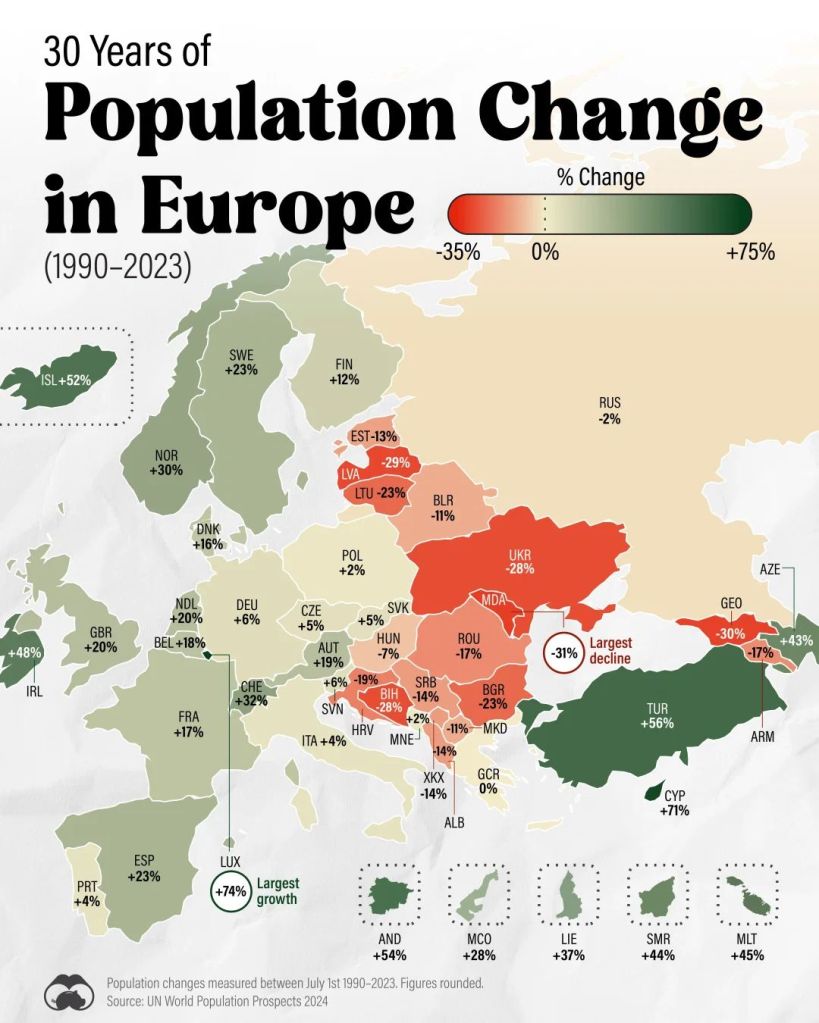
Demographic trends are compounding these challenges. The working-age population has already declined significantly and is projected to shrink by nearly 20 percent by 2050. If current population, growth, and labor market trends continue, the region could face a shortfall of more than 190,000 workers over the next five years.“
The predominant sentiment amongst the people who didn’t take sides in the recent protests is that neither the government nor the student and civic movement is interested in their well-being, and that either of those groups would take any measures to improve any aspect of the lives of Mr. and Mrs. Average.

 Serbianism