The Adriatic Pipeline (JANAF), which supplies oil to the Petroleum Industry of Serbia (NIS), is confident that the Office of Foreign Assets Control of the US Department of the Treasury (OFAC) will grant a license for NIS to continue operating.
Serbian President Aleksandar Vučić stated on Tuesday that if NIS does not obtain a license from the United States government by the end of this day, difficult days will lie ahead for Serbia. A complete stoppage of the refinery’s work would follow, and from Monday, no bank will do business with NIS.
The President of Serbia estimated that the chances of the Americans extending the license to NIS are 40 percent, and 60 percent that the answer from Washington will be negative.
In Croatia, however, they are somewhat more optimistic. JANAF, as reported by RTL, hired lawyers in the USA and believes in a positive outcome.
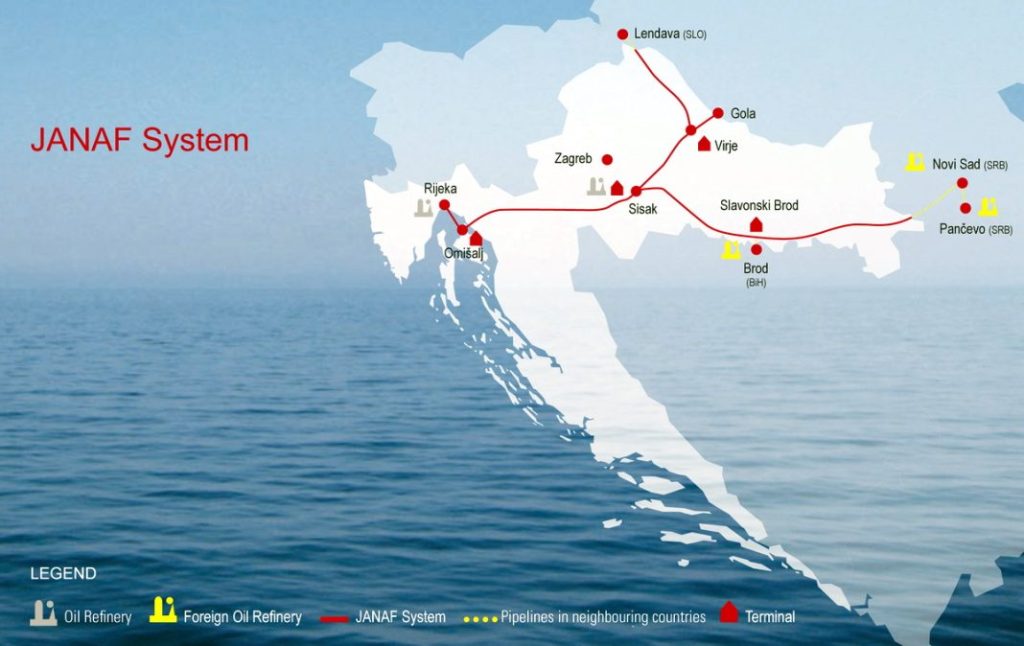
“JANAF must also obtain a license for the activities in question. Therefore, JANAF will absolutely know this,” Vladislav Veselica, a board member of this Croatian company, told RTL.
JANAF also says that they are ready for the oil to flow to Serbia immediately after receiving the license.
“We are at the operational level, and our teams are with the NIS teams, so we are ready immediately at the operational level,” said Veselica.
RTL also states that OFAC’s decision should be made by the end of today, but as they unofficially learn, the State Department has already given a positive opinion.
Veselica explained that oil transportation to NIS brings about a third of JANAF’s income, and that the sanctions will certainly affect the business results. He pointed out, however, that JANAF is a “serious company” and that it has stress tests for such situations.
In the meantime, the Minister of Foreign Affairs of Hungary, Peter Szijarto, said today in Belgrade after a meeting with the Minister of Foreign Affairs, Marko Đurić, that a “political agreement” had been reached with Serbia, and that today he would also agree on “technical details” on assistance to Serbia in the supply of energy, Beta reported.
He specified that MOL has already intensified its activities in order to compensate for possible deficiencies. According to Sijart, in November, MOL increased its capacity in the direction of Serbia twice, while in December, that inflow will be increased by two and a half times.
Sijarto emphasized that all available transport capacities are used, including river and rail transport.
He stated that MOL is now “playing all the instruments” in order to ensure supply, adding that one tranche has already been sent by rail, another is being prepared, and that transport on the Danube is permanent.
He stressed that the recent fire at the MOL refinery in Hungary will not affect that country’s intention to support Serbia.
Technical details were discussed at the meeting between Sijart and the Minister of Energy, Dubravka Đedović Handanović, after which the Hungarian minister confirmed the readiness of the MOL company to significantly increase deliveries of oil and derivatives to Serbia, using different logistics routes.
The two ministers also discussed long-term infrastructure projects, especially the construction of a new oil pipeline that would connect Serbia and Hungary.

 Serbianism