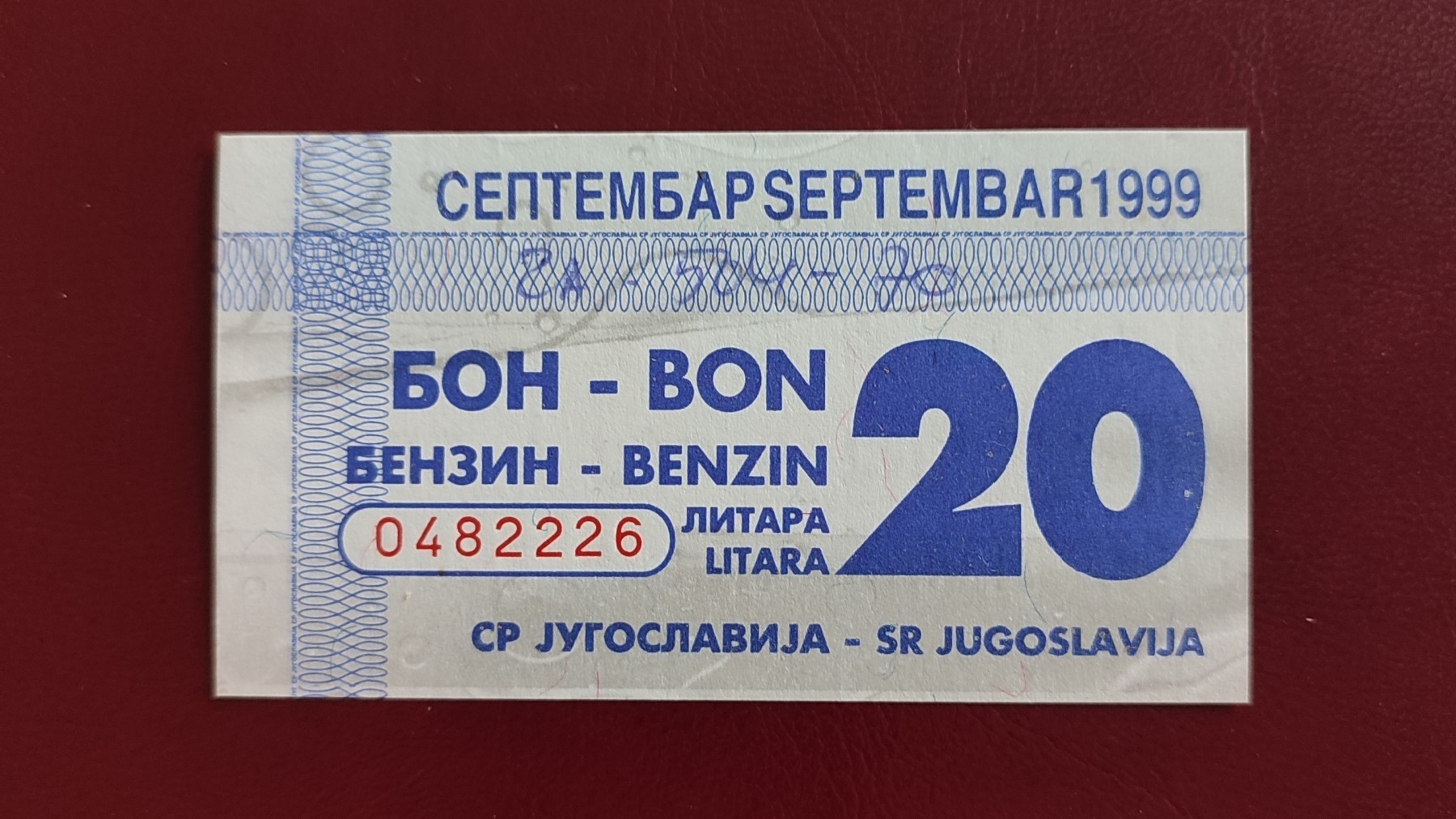
On October 9th, the Serbian Oil Industry NIS, majority-owned by Russian companies with Gazprom Neft holding the largest stake (44.85%), followed by a Gazprom-controlled firm named Intelligence (11.30%), made a statement that it is now under US sanctions. The sanctions will also affect other NIS businesses – its petrol stations in the Balkans (though it is divesting its Bulgarian subsidiary), oil and gas exploration in Romania and Bosnia, and NIS actively trades electricity in Serbia, Bosnia and Herzegovina, Montenegro, Romania, Slovenia, and Hungary. All firms dealing with NIS risk facing secondary U.S. sanctions.
Some effects are already noticeable – you cannot pay with VISA, American Express, or Mastercard at petrol stations anymore, only cash and local DINA cards.
It is worth noting that back in August, the company already reported its worst financial result in the first six months – a net loss of 3.6 billion dinars (€30.7 million) – its poorest performance since the pandemic year of 2020. Foreign airlines have stopped purchasing fuel from NIS at Belgrade airport.
President Aleksandar Vucic said on Thursday that the realistic assessment is that the refinery (in Pančevo) can operate without an additional oil supply until November 1 and added that when it comes to fuel, there will be no problems until the New Year.
Reacting to the US sanctions against NIS, Vucic said that this period (until Nov. 1) could be longer by five or seven days, but hardly any longer than that, Telegraf reports.
The Hungarian oil company MOL will increase deliveries to Serbia after US sanctions against Petroleum Industry of Serbia (NIS) came into force, Hungarian Foreign Minister Peter Szijjarto said today. “Since MOL plays an important role in supplying Serbia with crude oil and fuel, our Serbian friends can rely on increased deliveries from MOL,” Szijjarto said in a Facebook post.
Well, a friend in need is a friend indeed.
The ever-so-important Russian ambassador to Serbia, Alexandr Botsan-Kharchenko, said the imposition of sanctions by the United States against the Serbian Oil Industry (NIS) is all politics, and that Russia will continue to support Belgrade, N1 reports.
Gee, thanks, Your Excellency, we are so glad that you support our nation’s collective shot in the foot by tying our energy dependence on Russia. And let us reciprocate the support. The Russian foreign ministry reported yesterday that Serbia sent humanitarian aid to Kursk, Russia, worth around 6 million dollars. That’s what friends and brothers are for – to support each other’s glorious wars against reality.
The sale of the Oil Industry of Serbia to Russian Gazprom in 2008 received the widest possible political and public support. 214 parliament members for the ratification of the agreement that enabled the NIS sale – Serbian parliament has 250 members. The Big Brilliant Plan was that it was a price to pay for the Russian support in reclaiming Kosovo.
All of this will not trigger any self-reflection on the part of the broader Serbian public or its political class, because self-criticism is for the weak. The common wisdom regarding this oil predicament is that poor little Serbia is a victim of a confrontation between the US and Russia, not that it has built a ticking time bomb into its economy by throwing itself into a ludicrously suicidal Russian embrace, you know, those same Russians that have some fuel troubles themselves.
When people think of fuel shortages, most believe that there are lines queing up at petrol stations. Reality-check folks ask, “Is there still food on the table?” Nothing drastic like that is happening in Serbia for the moment – but it did happen back in the 1990s, during the Milošević era and the Yugoslav Wars.
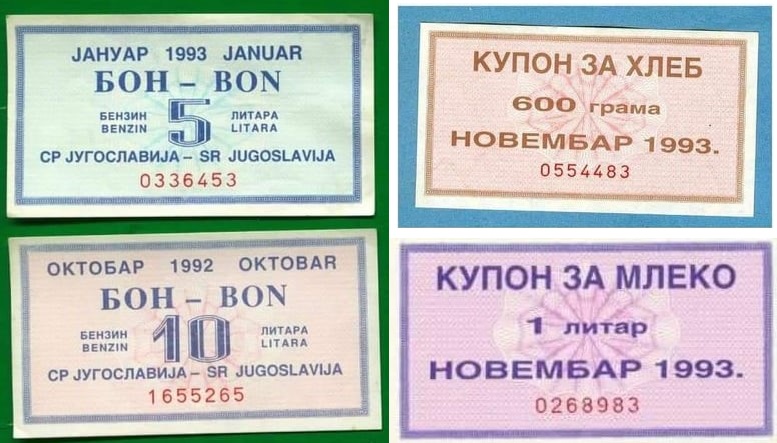
Pictured above are Serbian (or Federal Republic of Yugoslavia, to be exact) fuel, bread, and milk ration coupons from 1992 and 1993, during the sanctions and hyperinflation period. Aleksandar Vučić became a Serbian parliament member in 1993, by the way.
For those of you wondering, the hardships caused by failed nationalist politics will not put a dent in anyone’s political rating here. Most people in Serbia truly do love Putin’s yachts more than their children. And their children, those Wonderful Student Protesters, care about Kosovo, not the food on the table.
“The Students in the Blockade said that they would organize a gathering in support of fellow students in Kosovo on the same day that Serbian President Aleksandar Vucic is planning a gathering in support of the Kosovo Serbs“, N1 reports.
“The Students in the Blockade announced on an Instagram post that they would hold the gathering on Saturday, October 11, in Belgrade as a show of support to students from the University of Pristina based in Kosovska Mitrovica and their countrymen. Residents of Kosovo are due to vote in local elections.
The student gathering will start at 2 pm in front of Belgrade University Law School, followed by a march to the Serbian Government’s Office for Kosovo in New Belgrade’s Palace of Serbia.
The post said that the authorities have abandoned the people of Kosovo, leaving them without support, ‘except when their problems are used for election propaganda‘.”
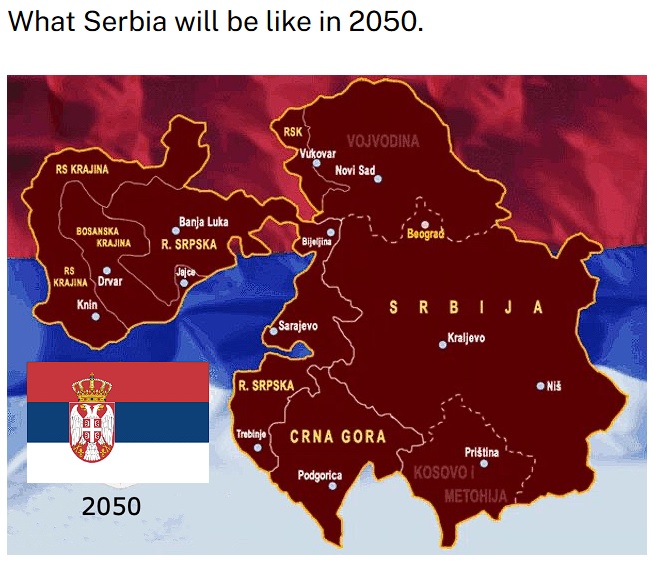
Territories and conquests were what people in Serbia cared about the first time around. This is what they wanted then, and it’s what they want now:
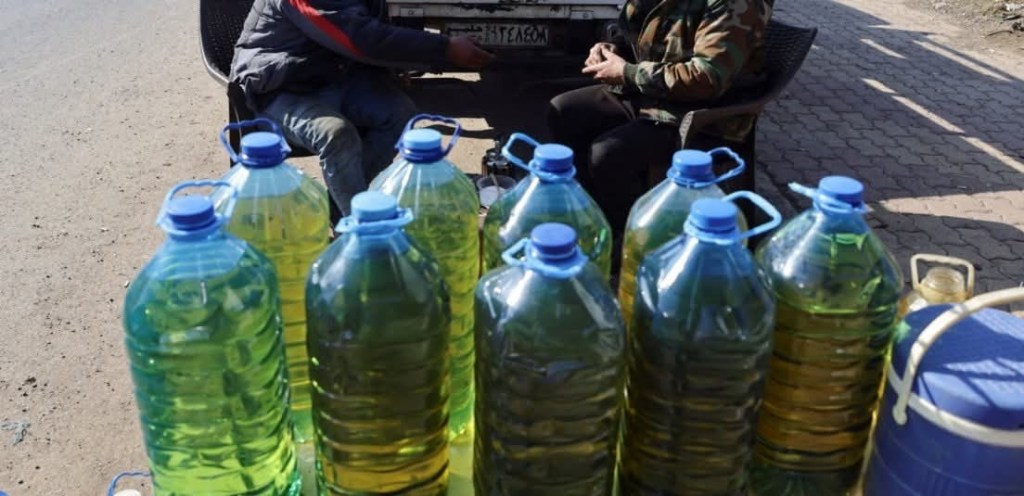
This is what they got the last time, among other things – black market diesel and gasoline packed in plastic bottles, color-coded by the country of origin:
The notion predominant in the young people’s minds here is that if push comes to shove, they can easily leave the country and find a job in the Decadent West, but come to visit Serbia from time to time to unwind with cheap booze, narcotics, partiying and prostitution, all the while feeling superior to their less fortunate, loser compatriots that they left behind. With a mindset like that, why would they support rational policies?


