While the Serbian media on both sides of the political fence tends to either ignore or downplay any sort of news that would make Russia look bad, by either ignoring it or belatedly reporting on it, both the pro-government and the pro-student media do talk about Yandex data centers’ destruction.
Some things are too big of a news story, so they seep in through the cracks of Serbian virtual realities. That was the case with Operation Spiderweb, for example, last year, when the shock echoed from foreign outlets caused the Serbian public to pay attention and react. And react it did by echoing Russian talking points about “Ukrainian resistance prolonging the war and how both sides should come to an agreement” yada yada.
The reactions of the vox populi to the plague incident, on the other hand, were mostly that it is a disinfo. Serbian people have an almost religious trust in Russian medicine. Our VIPs tend to go to treatments in Russia, like the late retired general Božidar Delić, and the money donation drives for people pooling money to go to medical treatments abroad commonly state that the person will go to Russia (or Turkey). The “cancer vaccines” by Russian wizards are hyped up, which is strange even by Serbian Russophiliac standards, because Serbian Russophiles are mostly diehard antivaxxers and COVID deniers – but all of a sudden they found a vaccine they simply adore, a Russian one.
And so what? The competition between the two dominant political forces in Serbia, namely the ruling Progressives bloc and the Student Ticket front tend to devolve into a shouting match of loves Russia more. Why? The strategic direction of Serbia’s development after the fall of Milošević was, supposedly, to become an EU member. But the pro-Russian crowd offers an alternative: the Serbian World joining hands with the Russian world and, internationally, BRICS. Communist Yugoslavia was a key player in the Non-Aligned Movement, a club of Third World countries, and the perception of today’s public in Serbia is that Yugoslavia, as such, was a well-respected country internationally, that punched above its weight and profited much economically from such a stature. Wounded Serbian national pride longs for that lost glory, even if it only exists as a perception. So the national-populist Progressives and the national-bolshevik Students, along with minor political factors like the late Milošević’s Socialist Party and the alt-righters such as the Alternative Right, are offering a model of economy, trade, cultural exchange and, last but not least, security, both internal and external, that would render joining the EU obsolete.
Serbia is a chief European partner in the Chinese Belt and Road Initiative, Russian companies, such as the beleaguered Yandex, make up a good portion of the Serbian economy, along with the sanctioned NIS (Serbian Oil Industry), and then there are also Indian companies such as Tata and PKC.
There are four needs in every person’s life:
1. Basic amenities: food, water, shelter
2. Basic safety: feel safe walking around and at home
3. Personal accomplishment: be respected by your colleagues and peers
4. National prestige, international recognition of one’s country
It’s the number 4 that always irked the Serbs. Most countries have a reputation: Japan is cool and unthreateningly weird, Germany is hardworking, the USA is powerful and produces most of the world’s pop culture, the Swiss have the banks and the ski resorts, Italy and France have cuisine and tourism.
And so on and so forth. But what does Serbia have? What is there for Serbia to be recognizable and respected? Serbian people fed their egos with sports achievements. It was a common sight to see Djoković’s Serbian supporters wearing a hat worn by the Republika Srpska army officers, the same attire from the Mladić murals. Take that, Westerners! You may have snatched away our military victories, but look here, WE HAVE THE BEST TENNIS PLAYER! Take that, Eurotrash!
But it’s not enough if the darn Westerners don’t recognize our awesomeness.
“Respect our authoritah!”, frustrated Serbs scream at clouds of EU/NATO conspirators who took Kosovo and Montenegro and Republika Srpska away from us. But we get respect and sympathy elsewhere – from the emerging multipolar world of BRICS. The Chinese and Russians feel our pain.
So does the rest of the planet, oppressed by Teh Ebul Western Neo-Colonialism – Africans, Indians, South Americans. Plenty of shoulders to cry on and pats on the back from like-minded people and governments around the globe. Things that raise eyebrows in Europe, like invading Bosnia or trying to ethnically cleanse Kosovo, are framed as a struggle against US/Western hegemony in Moscow, Beijing, Pyongyang, Tehran, etc. Like Lady Gaga, everyone lives for the applause, and applause we get from our brothers & allies whose Dear Leaders also have TV monologues with captive audiences.
The multi-polar world, reminiscent of the Cold War yesteryears, is a very alluring prospect for people outside the Collective West – a place where they can pursue their own national ambitions, such as the revanchist Serbian world with big allies like Russia and China to come to their aid and like-minded Democratic People’s Republics of Tyranny to snuggle with, trade commodities, and exchange notes on the most expeditious ways of castrating teenagers in basements of police stations.
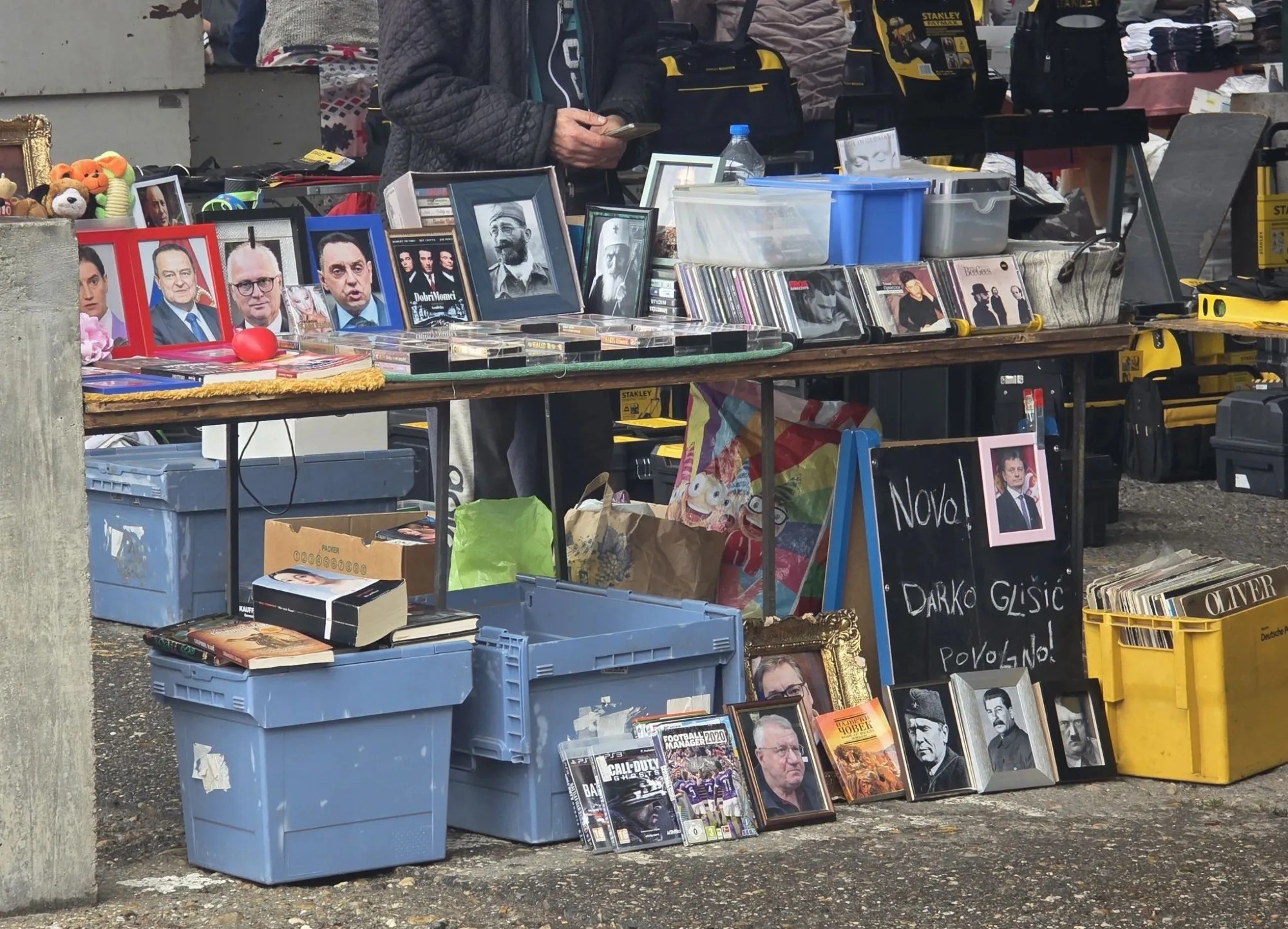
[CAPTION: Peak Serbian ideological mishmash – portraits of (world) leaders popular in Serbia on sale at a Novi Sad flea market called Najlon Pijaca – from Hitler and Josip Broz Tito to Darko Glišić and Patriarch Pavle (source: Facebook)].


